
ARTICLE
The First Things to Understand About Manifest V3
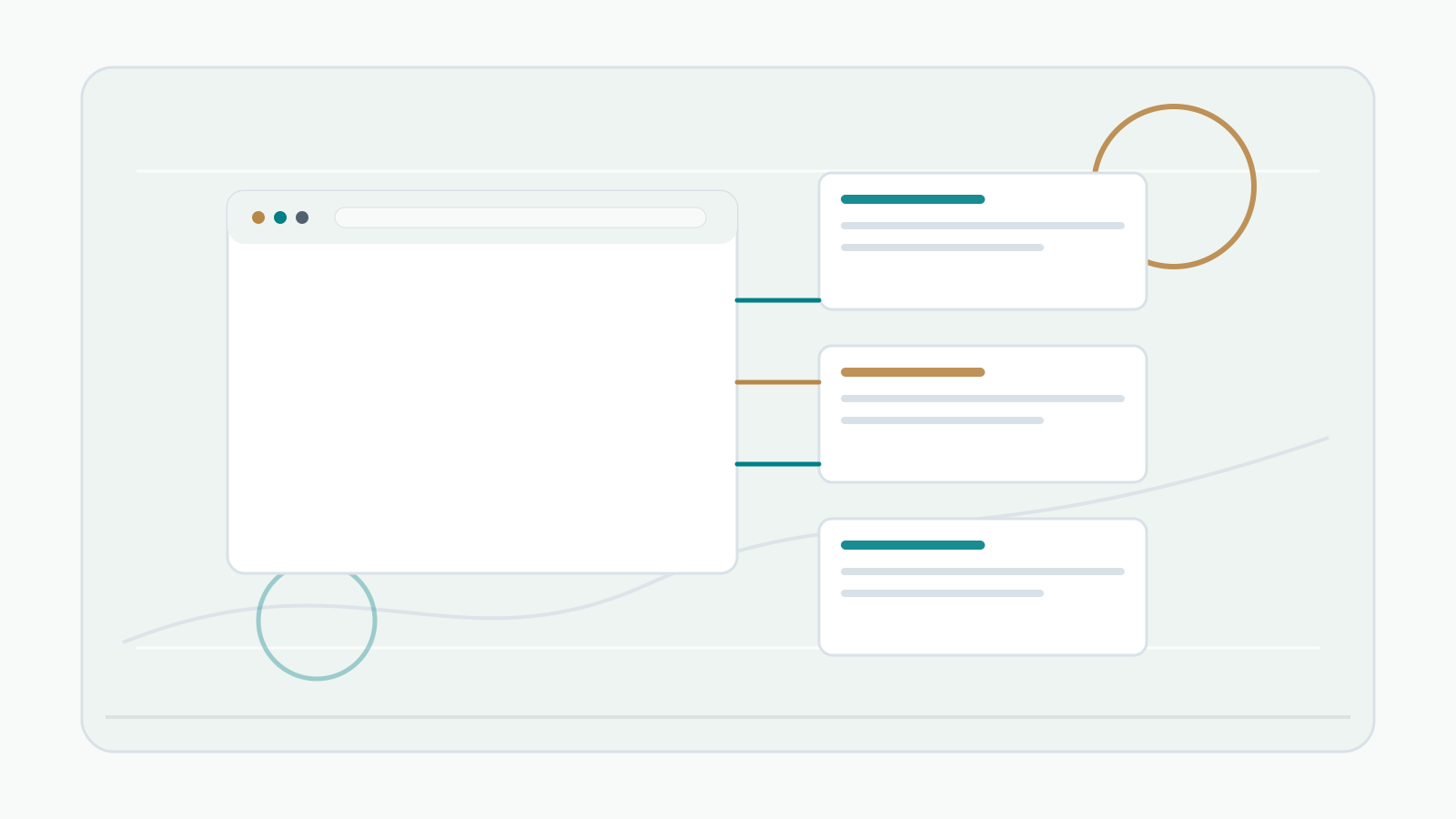
Manifest V3 is the baseline architecture for modern Chrome extension development. The key is not memorizing every API. The key is understanding where each part of the extension runs.
The manifest is the entry point. It tells Chrome which pages exist, which background worker to load, which permissions are requested, and which files belong to the extension. Treat it as a contract between the product and the browser.
Manifest V3 uses an extension service worker for background behavior. That worker is event-driven. It can start when Chrome needs it and stop after the work is done. Because of that, you should not rely on long-lived in-memory state. Persist anything important in chrome.storage or on your server.
This matters for paid extensions. A variable that says isPaid = true inside a worker is not durable. License state should be cached locally for fast UI and validated through a server-side API when needed.
Extension pages, such as popup and options pages, are closer to normal web UI, but they still run inside the extension security model. Avoid designs that depend on arbitrary remote JavaScript. Keep the shipped behavior inside the extension package and use server APIs for data and entitlement checks.
A practical learning order is manifest.json, popup, options page, service worker, and storage. Once those are stable, add content scripts, host permissions, store policy checks, and paid-license behavior.
References
- Chrome Extensions Get started: https://developer.chrome.com/docs/extensions/get-started/
- Chrome Extensions Declare permissions: https://developer.chrome.com/docs/extensions/develop/concepts/declare-permissions
- Chrome Extensions Storage API: https://developer.chrome.com/docs/extensions/reference/api/storage
- Chrome Web Store Program Policies: https://developer.chrome.com/docs/webstore/program-policies/policies
- Chrome Web Store User Data FAQ: https://developer.chrome.com/docs/webstore/program-policies/user-data-faq
- Polar Documentation: https://docs.polar.sh/
- Polar Webhook Endpoints: https://polar.sh/docs/integrate/webhooks/endpoints
- Polar Automated Benefits: https://docs.polar.sh/features/benefits/introduction